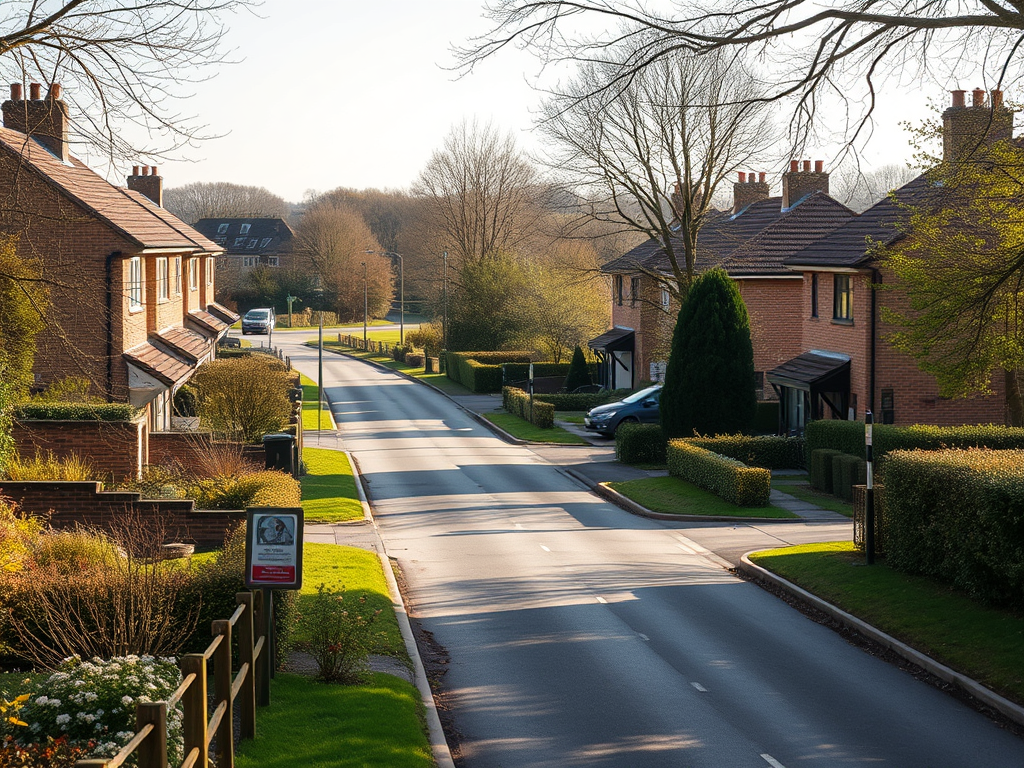
Kitwell is a small residential area located in the southwest of Birmingham, forming part of the wider Bartley Green district. It lies close to the Birmingham–Worcestershire boundary and sits between areas such as Bartley Green, Weoley Castle and Woodgate. Although not always widely recognised as a standalone district, Kitwell has a clear local identity, particularly among long-term residents and in local reference.
The area is centred around Kitwell Lane, which acts as its main spine and gives the area its name. Kitwell’s catchment is relatively compact, made up mainly of post-war housing estates and surrounding green spaces. It falls within the Bartley Green ward for local government purposes and shares many of the same services, schools and amenities as the wider Bartley Green area.
Historically, Kitwell was largely open land and farmland on the edge of Birmingham. Like much of Bartley Green, it underwent significant development after the Second World War when Birmingham City Council expanded housing into the city’s outer districts. The construction of council housing during the 1950s and 1960s transformed Kitwell into a settled residential neighbourhood, designed to provide improved living conditions for families relocating from inner-city areas.
Housing in Kitwell is predominantly made up of semi-detached houses, low-rise flats and maisonettes, many with gardens and access to open spaces. The layout reflects post-war planning ideals, with separation between housing and main roads, generous green verges and nearby recreational areas. These features contribute to the area’s quiet and suburban character.
One of Kitwell’s defining features is its proximity to Bartley Reservoir, one of Birmingham’s most significant water supply reservoirs. While public access to the water itself is restricted, the surrounding green space and walking routes are an important part of everyday life for local residents. This closeness to open land and countryside gives Kitwell a more spacious feel than many parts of the city.
Kitwell does not have major landmark buildings or tourist attractions, but its significance lies in its role as a stable residential community within Birmingham’s post-war expansion. Local schools, community facilities and shopping parades in nearby Bartley Green and Weoley Castle serve the area, with public transport providing links to Northfield, Selly Oak and Birmingham city centre.
Administratively, Kitwell does not exist as a separate ward, but is fully included within the Bartley Green ward. As a result, it is often described as part of Bartley Green rather than as a distinct district. Despite this, the name Kitwell remains in use locally and continues to be recognised in street names, school catchments and community references.
Today, Kitwell is best described as a quiet, family-oriented residential area, valued for its green surroundings, low density housing and connection to the wider Bartley Green community. It represents a typical example of Birmingham’s mid-twentieth-century suburban development and continues to provide a settled environment on the city’s southwestern edge.







Leave a Reply