Introduction
The Commonwealth Games are one of the world’s major international multi-sport events, bringing together athletes from across the Commonwealth of Nations every four years. In 2022, the Games were held in Birmingham, England, marking a significant moment in the city’s sporting and cultural history. The Birmingham Commonwealth Games showcased not only elite athletic performance but also the city’s diversity, resilience and capacity to deliver a global event on a grand scale.
Background of the Commonwealth Games
The origins of the Commonwealth Games date back to 1930, when the first event was held in Hamilton, Canada, under the name the British Empire Games. Over time, as the political and cultural makeup of the Commonwealth evolved, the Games were renamed several times before becoming known officially as the Commonwealth Games in 1978.
The Games have traditionally emphasised friendly competition, shared values and cultural exchange, alongside high-level sporting achievement. Unlike the Olympic Games, the Commonwealth Games feature sports that reflect the shared sporting traditions of member nations, including athletics, swimming, boxing, netball and lawn bowls.
Why Birmingham Was Chosen
Birmingham was awarded the 2022 Commonwealth Games after the original host city, Durban in South Africa, withdrew due to financial difficulties. Birmingham’s bid was supported by the UK Government, the Birmingham City Council and the Commonwealth Games Federation, with the city selected in 2017.
The choice of Birmingham reflected its strong sporting heritage, central location, excellent transport links and its reputation as one of the UK’s most culturally diverse cities.
Commonwealth Games 2022
The Birmingham 2022 Commonwealth Games were held from 28 July to 8 August 2022. Over eleven days, the city welcomed athletes and visitors from across the Commonwealth, transforming Birmingham into a global sporting hub.
Venues and Infrastructure
A wide range of venues across Birmingham and the surrounding West Midlands were used during the Games. These included:
- Alexander Stadium – redeveloped as the main athletics venue and host of the opening and closing ceremonies
- Utilita Arena Birmingham – hosting gymnastics and weightlifting
- Sandwell Aquatics Centre – newly built for swimming and diving events
- National Exhibition Centre (NEC) – used for badminton, netball and wrestling
- Victoria Square and Smithfield – city-centre locations used for beach volleyball and basketball 3×3
Significant investment was made in long-term infrastructure, ensuring that many of the venues would continue to benefit local communities after the Games.
Sports and Participation
The Birmingham Games featured 19 sports and 8 para sports, with over 5,000 athletes representing 72 nations and territories. Birmingham 2022 was notable for its strong commitment to inclusivity and equality.
Key sporting features included:
- The largest fully integrated para-sport programme in Commonwealth Games history
- Equal medal opportunities for men and women
- The debut of women’s T20 cricket as a Commonwealth Games sport
Highlights of the Games
Birmingham 2022 produced numerous memorable moments and outstanding performances.
- England topped the medal table for the first time since 1986, achieving a record medal haul
- Athletes from nations such as Australia, Canada, India and Jamaica delivered exceptional performances across athletics, swimming and gymnastics
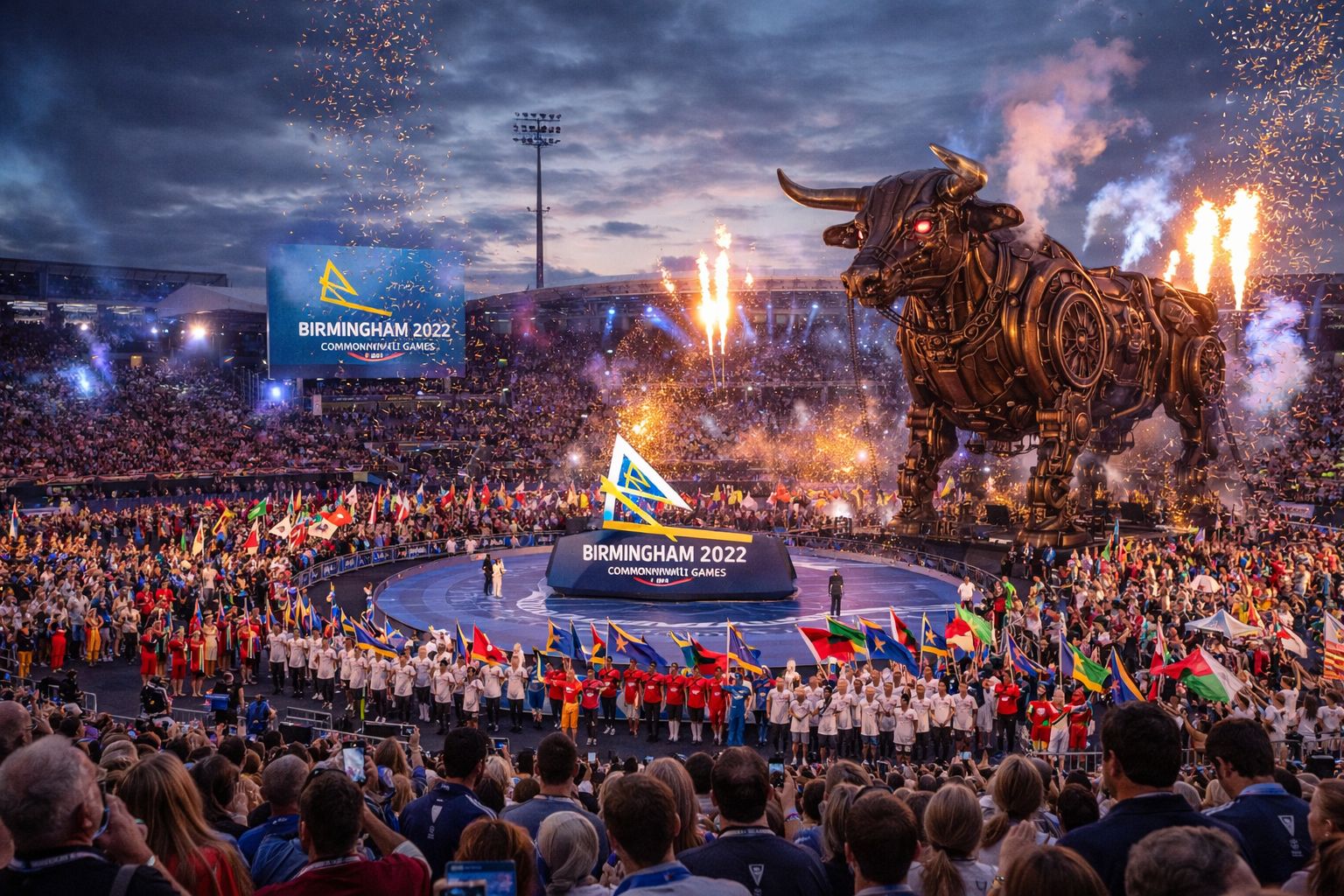
- The opening ceremony celebrated Birmingham’s industrial heritage, music scene and cultural diversity, receiving widespread praise for its creativity and inclusivity
- The closing ceremony highlighted unity and the passing of the Commonwealth Games baton to Victoria, Australia, host of the 2026 Games
Cultural and Social Impact
Beyond sport, the Games had a significant cultural and social impact. A wide-ranging cultural festival accompanied the sporting events, featuring music, art, food and community-led projects across the city.
The Games also aimed to promote:
- Youth engagement and volunteering
- Urban regeneration, particularly in areas such as Perry Barr
- Increased participation in sport and physical activity
Thousands of volunteers, known as “Games Makers”, played a vital role in welcoming visitors and supporting athletes.
Legacy of Birmingham 2022
The legacy of the Birmingham Commonwealth Games extends well beyond the closing ceremony. Investments in transport, housing and sporting facilities have contributed to long-term regeneration, while the city’s international profile has been significantly enhanced.
Birmingham 2022 is widely regarded as a successful example of how a major sporting event can deliver lasting benefits when aligned with community needs and inclusive values.
Conclusion
The Birmingham Commonwealth Games of 2022 stand as a defining chapter in the city’s modern history. Combining world-class sport with cultural celebration and social purpose, the Games reflected the spirit of the Commonwealth while leaving a meaningful and lasting legacy for Birmingham and the wider West Midlands.





Leave a Reply