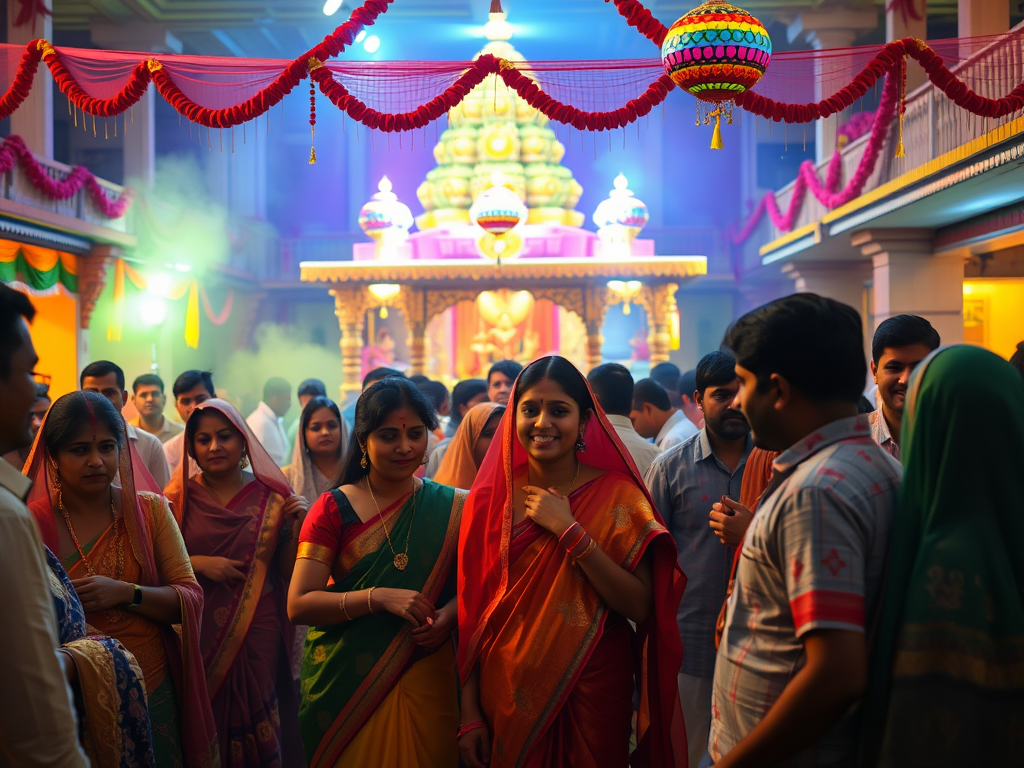
Birmingham is home to one of the largest and most established Indian communities in the United Kingdom, a presence that has shaped the city’s cultural, religious and economic life for well over a century. Today, the Indian community forms a vital and visible part of Birmingham’s identity, contributing to its diversity, enterprise and civic life.
Early connections and settlement
Links between Birmingham and the Indian subcontinent date back to the nineteenth century, when Britain’s industrial cities began to attract workers, students and traders from across the British Empire. However, it was after the Second World War that significant numbers of Indian migrants settled permanently in the city.
During the 1950s and 1960s, Birmingham’s expanding manufacturing sector required labour, particularly in engineering, foundries, transport and textiles. Many Indian migrants arrived directly from India, while others came via East Africa following political upheaval in countries such as Kenya and Uganda. These new arrivals often settled in inner-city areas close to employment, including Handsworth, Sparkhill, Sparkbrook, Aston and Smethwick.
Community growth and identity
As the community grew, Indian families established strong social networks based on extended family ties, regional origins and shared faith. Small businesses, corner shops and textile firms soon followed, laying the foundations for economic independence and community stability.
Education was seen as a priority, and successive generations have achieved strong academic and professional success. Over time, the Indian community has become represented across medicine, law, business, academia, politics and the arts.
Religious life and major places of worship
Religion has played a central role in maintaining cultural identity and community cohesion. Birmingham is notable for the diversity of Indian religious traditions practised within the city.
Hinduism
Birmingham has several prominent Hindu temples serving different traditions and linguistic groups. These temples function not only as places of worship but also as cultural centres, offering language classes, festivals and community support.
Key Hindu sites include temples in Handsworth, Sparkhill and Edgbaston, many of which host major celebrations such as Diwali, Navratri and Holi, drawing visitors from across the Midlands.
Sikhism
The Sikh community is highly visible in Birmingham, with a number of large gurdwaras across the city. Sikh migration to Birmingham began in the early twentieth century and increased significantly after the Second World War.
Gurdwaras serve as spiritual centres as well as places of social support, providing langar (free meals), advice services and charitable outreach. Areas such as Handsworth, Smethwick and Aston are particularly associated with Sikh heritage.
Islam (Indian Muslim communities)
Indian Muslims form an important part of Birmingham’s wider Muslim population. Mosques in areas such as Sparkbrook, Sparkhill and Small Heath reflect the religious and cultural traditions brought from different regions of India. Religious observance is closely linked with community education, charity and family life.
Jain and other traditions
Smaller communities, including Jains, are also present in Birmingham. Jain centres focus on religious study, meditation and charitable work, often collaborating with other faith groups.
Cultural life and traditions
Indian culture has had a profound influence on Birmingham’s wider cultural scene. The city is internationally recognised for its South Asian cuisine, with areas such as Balti Triangle becoming synonymous with Indian and South Asian food culture.
Music, dance and fashion have also flourished, with Birmingham playing an important role in the development of Bhangra music in the UK, alongside classical Indian dance forms such as Bharatanatyam and Kathak.
Business and economic contribution
Indian-owned businesses have long been central to Birmingham’s economy. From small family-run shops to major manufacturing firms and professional services, the community has demonstrated strong entrepreneurial spirit.
Second and third generations have expanded into technology, property, finance and creative industries, contributing to Birmingham’s regeneration and international profile.
Civic and political life
Members of Birmingham’s Indian community have been active in civic engagement and public service. Community leaders, councillors and MPs of Indian heritage have helped shape local and national policy, particularly in areas such as education, equality and social cohesion.
Faith organisations and community groups continue to play a role in dialogue between cultures, helping to address social challenges and promote understanding.
Life today
Today, the Indian community in Birmingham is diverse, confident and deeply rooted. While traditions remain important, identities continue to evolve, blending British and Indian influences across generations.
Birmingham’s Indian community remains a cornerstone of the city’s multicultural character, contributing not only to its economy and cultural life, but also to its sense of shared history and future.





Leave a Reply