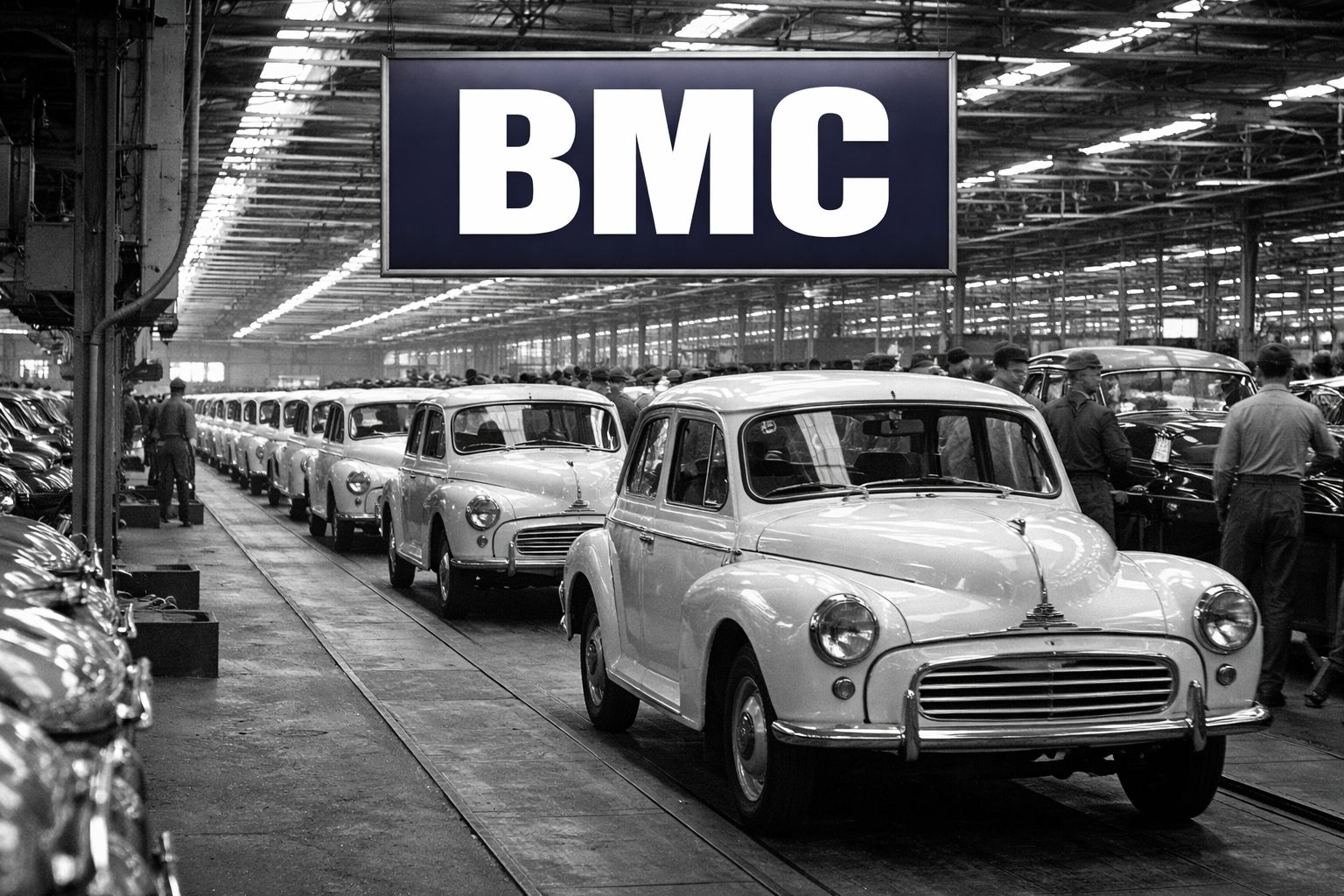
The British Motor Corporation, or BMC, was once one of the world’s largest vehicle producers. It was formed in 1952 as a result of a merger between Austin and Morris. BMC became one of the world’s largest car manufacturers, responsible at its peak for around 39% of British car exports.
The British car industry did not keep up with the times and was in decline by the time it was nationalised by the government in 1975 and renamed British Leyland. This later became the Austin Rover Group. The group was sold to British Aerospace in 1998, but just three years later they sold it to BMW. British Aerospace had been losing too much money keeping the company afloat. Some of the cars had been developed under partnership with Honda, so it came as a surprise when BMW purchased the company.
BMW invested heavily in the group for the next six years, but eventually concluded that it was spending too much to maintain it. The Phoenix Consortium then bought the business for just £10, acquiring a large loan and thousands of unsold cars. With little investment in research and development and an agreement to build cars in India, it struggled to establish its reputation as a quality car builder and faced fierce competition.
The five Phoenix directors made sure they lined their pockets with more than £16 million in salaries while the MG Rover Group itself continued to lose money. The last vehicles rolled off the production line in 2005 and the company went into administration. It was finally sold to a Chinese consortium called SAIC, which moved production to China, with the exception of MG sports cars and a small operation still at Longbridge employing a few hundred people.
The sprawling factory at Longbridge is now a shadow of its former self. Most of it has been demolished to make way for new developments. However, British Leyland continues in India to this day and still maintains strong connections to the UK.
Although BMC may seem to have faded into history, it lives on in Turkey. Licenses for some BMC products were passed to a small Turkish company that retained the original name and logo and began producing vehicles. Today, BMC is a large producer of light vehicles, trucks, and buses, even exporting some of its products to the UK.
Visitors to Turkey may notice Leyland Sherpa lookalike vehicles in villages and towns across the country, often in a flatbed style rather than a van. These vehicles, named Levend, were produced in their old shape until 1999 and in a new format until 2009. They are known for their durability, strength, and reliability, and are still highly valued for farming or city delivery use. A very healthy second-hand market exists for them in Turkey.
BMC lives on. Although it is no longer British, it retains its pedigree. Like Ashok Leyland, it has a proud reputation, and the Leyland Sherpa, often overlooked in the UK in favor of the Ford Transit, proved to be a durable and successful vehicle, as demonstrated by its long production span and enduring popularity in Turkey.




Leave a Reply