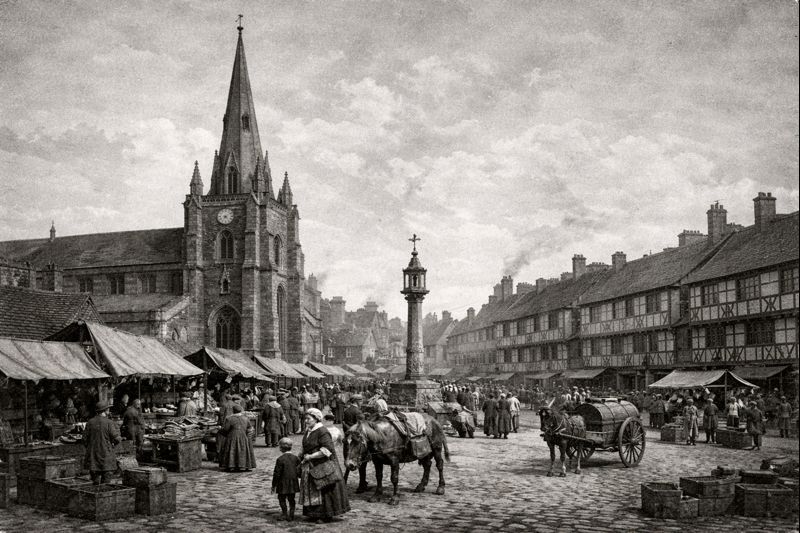
Birmingham’s past undoubtedly stretches back to the Bronze Age and beyond.
Very little physical evidence survives from this period, aside from scattered
flint tools and bronze artefacts now housed in the city’s museums.
Early Roman military roads passed through the region, linking forts and
settlements across the Midlands.
Anglo-Saxon settlement began around AD 700. Tribes such as the Hwicce and the
Anglian Mercians made the area their permanent home. Evidence of this survives
in local place names: the suffix -ley, meaning a woodland clearing,
appears in Selly, Yardley, Moseley and Warley. Birmingham itself derives from
Beorma-inga-ham — the home of Beorma’s people.
Medieval and Norman occupation added further layers to the region’s identity.
The origins of many place names are now obscure, though remains such as
Weoley Castle provide evidence of medieval settlement.
The Domesday Survey of 1086
By the time of the Domesday Book, independent communities had fallen under the
control of major Norman landowners. Dudley Castle, held by William Fitz-Ansculf,
was a dominant influence. In 1086, Birmingham manor was valued at just £1,
considerably less than neighbouring Yardley and Handsworth.
Peter de Birmingham, the first recorded lord of the manor, presided over a
small settlement consisting of five villagers and four smallholders with two
plough teams. Aston, by contrast, recorded 43 adults.
In 1166 Peter de Birmingham acquired the right to hold a weekly market at his
castle. The market prospered and laid the foundations of the town. In 1232,
townspeople negotiated freedoms from compulsory labour, reflecting the growing
importance of merchants and craftsmen, particularly in cloth and metalworking.
Birmingham on the Map
By the mid-14th century Birmingham was the third largest town in Warwickshire,
behind Coventry and Warwick. The market thrived, trading in cloth and metal
goods. Religious and civic institutions followed, including the Guild of the
Holy Cross in 1392, a chapel at Deritend, and later a guildhall and grammar
school — Birmingham’s first educational institution.
The castle gradually declined in importance. In the 1530s Edward de Birmingham
lost the manor after falling from royal favour and died in 1538. Control of
Birmingham passed through the Crown and later to the Dudley estates.
Birmingham Expands
By the early 16th century the town’s population approached 1,000. Birmingham
was already known for metalworking, and in 1511 the Clerk of Ordnance placed
orders for horseshoes and weaponry for the Royal Army. Trade links developed
with Bristol and East Anglia, while tanning and leatherworking flourished.
During the English Civil War, Birmingham largely supported Parliament.
Prince Rupert’s attack on the town in 1643 left a lasting impression, and
Birmingham thereafter favoured the Parliamentary cause.
By 1700 the population had reached around 15,000, driven by immigration from
surrounding villages. Birmingham gained a reputation as a place of
opportunity, innovation and enterprise.
The Age of Revolution
Birmingham became a centre of the Industrial Revolution. Its iron trade,
gunmaking, button-making and “toy” industries exported goods across Britain
and Europe. Despite unrest such as the Priestley Riots of 1791, the town
continued to expand.
The Lunar Society
Founded around 1765, the Lunar Society brought together leading intellectuals
including Matthew Boulton, James Watt, Erasmus Darwin, Josiah Wedgwood and
Joseph Priestley. Meeting at Soho House, they played a crucial role in shaping
the scientific and industrial transformation of Britain.
The Age of Transport
Canals engineered by James Brindley and later Thomas Telford connected
Birmingham to national and international markets. By 1800, more than 100 boats
a day passed through the town, earning Birmingham its reputation as “the
workshop of the world”.
The Arrival of the Railway
Railways transformed Birmingham once again. The London and Birmingham Railway
opened in 1838, followed by New Street Station in 1854. Census records from
1831 show the population had reached 112,000, firmly establishing Birmingham
as Britain’s industrial heartland.
World Wars and Rebuilding
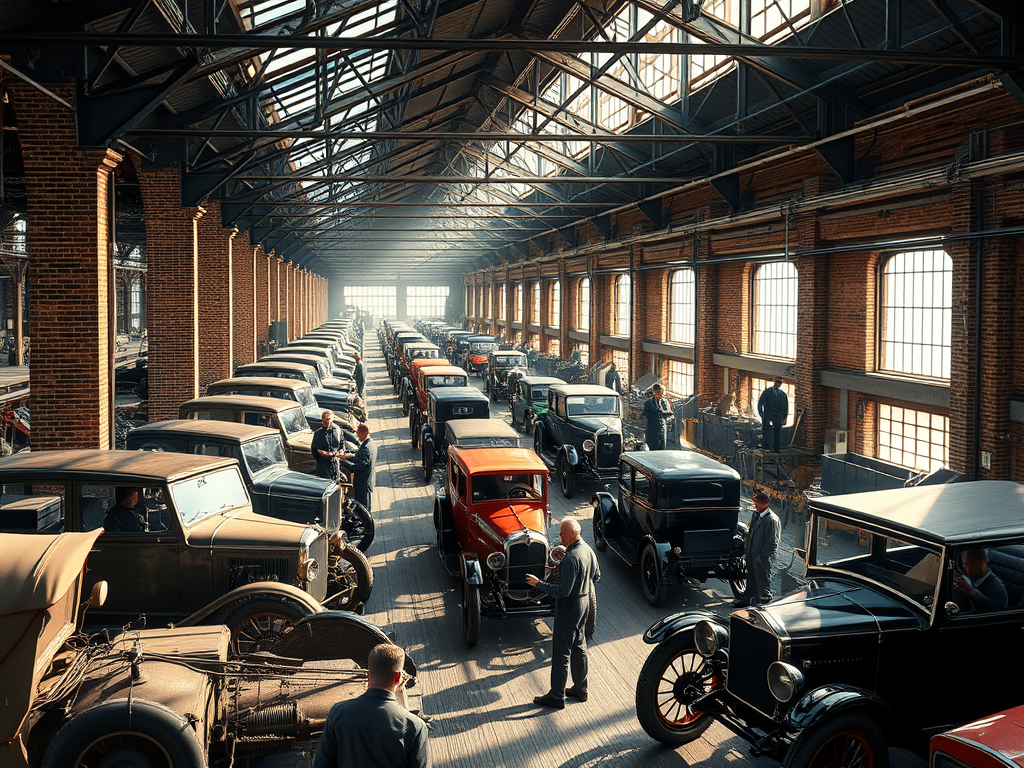
During the First World War, Birmingham supplied vast quantities of arms and
equipment, while tens of thousands of men from the city served overseas.
During the Second World War, Birmingham’s factories were again vital to the
war effort and became major targets for Luftwaffe bombing.
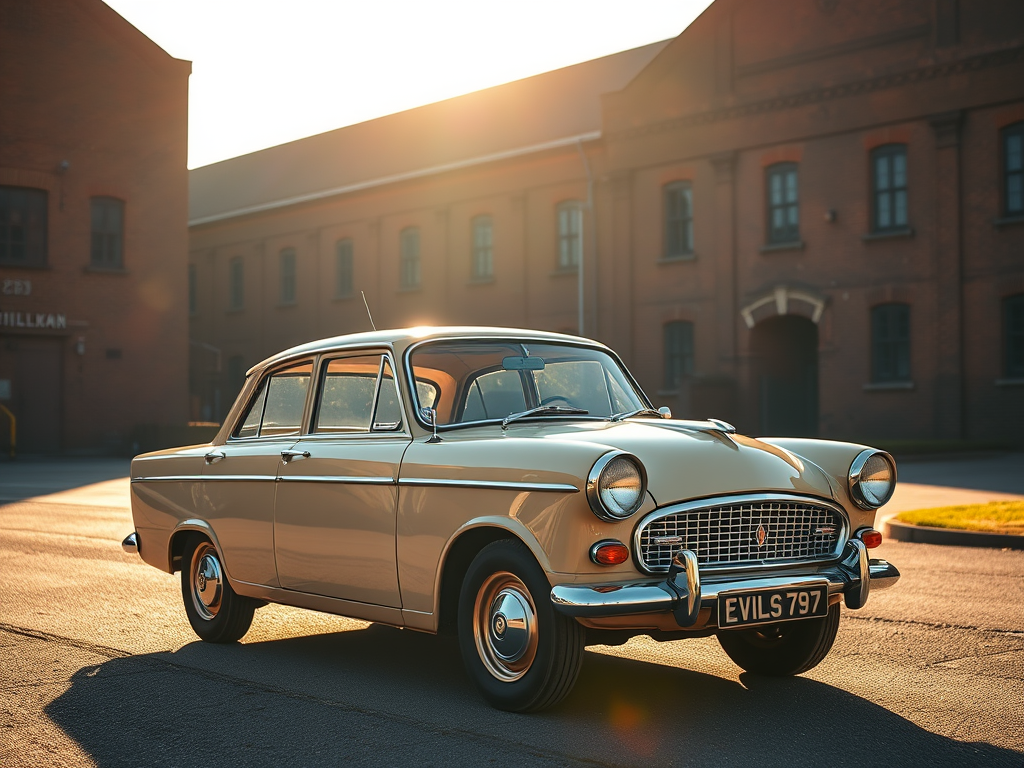
Post-war rebuilding reshaped the city. Immigration from the Caribbean and
South Asia enriched Birmingham’s cultural identity, while recent decades have
seen significant regeneration. Today, Birmingham continues to evolve as a
modern city built upon a remarkable industrial and social heritage.



Leave a Reply